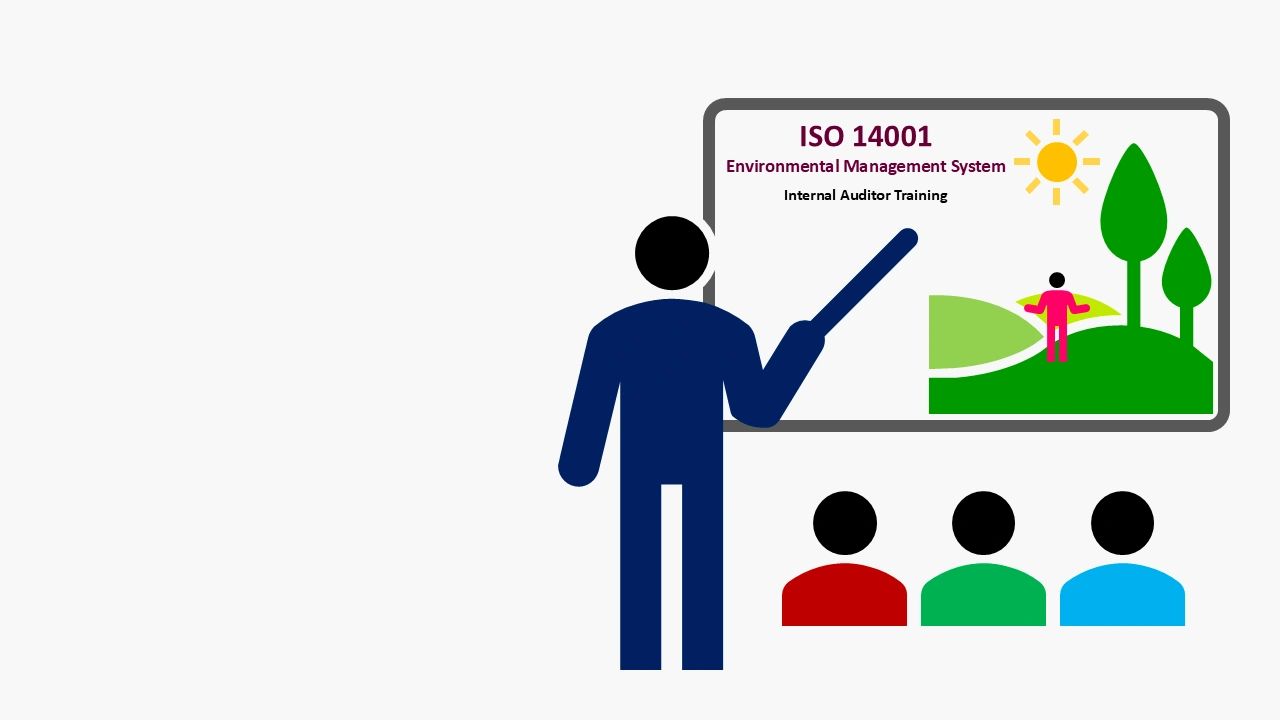
ISO 14001
Internal Auditor Training
ISO 14001 Internal Auditor Training – Master EMS Audits
Develop the skills to plan, conduct, and report internal audits that ensure ISO 14001 compliance and strengthen your Environmental Management System.
ISO 14001
ISO 14001 is the internationally recognized standard for Environmental Management Systems (EMS), designed to help organizations identify, manage, and reduce their environmental impacts. It provides a structured framework for improving environmental performance while ensuring compliance with applicable environmental laws and regulations.
Implementing ISO 14001 enables organizations to control environmental aspects such as energy use, waste generation, emissions, and resource consumption. The standard emphasizes risk-based thinking, legal compliance, environmental protection, and continual improvement, helping organizations minimize environmental risks and operate sustainably.
ISO 14001 certification demonstrates an organization’s commitment to environmental responsibility and sustainable business practices. It enhances corporate reputation, supports regulatory compliance, reduces environmental costs, and strengthens stakeholder confidence. Applicable to organizations of all sizes and sectors, ISO 14001 helps build an effective EMS aligned with global sustainability goals.
Top Benefits
- Improves environmental performance and reduces environmental impact
- Ensures compliance with environmental laws and regulations
- Reduces waste, emissions, and resource consumption
- Enhances risk management related to environmental aspects
- Promotes sustainable and responsible business practices
- Improves operational efficiency and cost savings
- Strengthens corporate image and brand reputation
- Increases stakeholder and customer confidence
- Supports continual improvement in environmental management
- Applies to organizations of all sizes and industries
Principles
- Environmental Responsibility – Managing activities in a way that protects the environment and prevents pollution.
- Leadership & Commitment – Top management involvement in establishing environmental policy, objectives, and accountability.
- Life Cycle Perspective – Considering environmental impacts across the life cycle of products and services.
- Risk-Based Thinking – Identifying and controlling environmental risks and opportunities related to activities and processes.
- Legal & Regulatory Compliance – Meeting applicable environmental laws, regulations, and compliance obligations.
- Process Approach – Managing environmental activities through structured and controlled processes.
- Continual Improvement – Ongoing improvement of environmental performance and the EMS.
- Employee Awareness & Participation – Engaging employees to promote environmental awareness and responsible practices.
- Performance Evaluation – Monitoring, measuring, and evaluating environmental performance and objectives.
- Stakeholder Communication – Transparent communication with interested parties on environmental commitments and performance.
ISO 14001 Internal Auditor Training – Our Approach
Our ISO 14001 Internal Auditor Training equips professionals with the skills and knowledge to conduct effective internal audits of Environmental Management Systems (EMS) and ensure compliance with ISO 14001 requirements. The training emphasizes practical application, audit techniques, and continual improvement to strengthen your EMS. This training ensures your team can perform confident, compliant, and effective EMS audits, strengthen environmental performance, and support successful ISO 14001 certification. Our approach includes:
- Introduction to ISO 14001 – Understanding the standard, clauses, and regulatory obligations related to EMS audits.
- Audit Planning & Preparation – Training on audit scope, checklists, risk-based planning, and sampling methods.
- Practical Audit Techniques – Hands-on exercises for conducting audits, reviewing records, interviewing personnel, and observing processes.
- Identifying Nonconformities – Learning to detect gaps, document findings accurately, and report audit results effectively.
- Corrective Actions & Follow-Up – Guidance on root cause analysis, corrective action planning, and verification of effectiveness.
- Audit Reporting & Communication – Preparing audit reports, presenting findings to management, and supporting continual improvement.