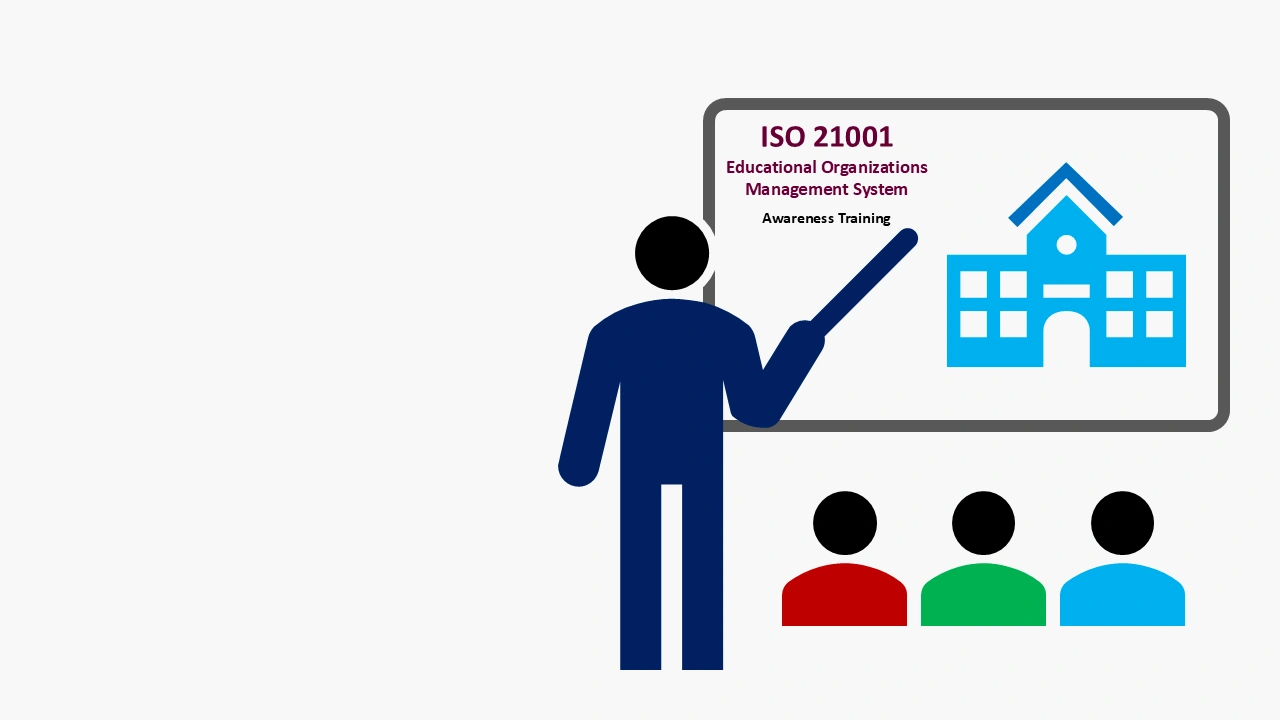
ISO 21001
Awareness Training
Empower Your Educational Organization with ISO 21001 Awareness Training
Build a learner-focused management system with our ISO 21001 awareness training. Understand the requirements, benefits, and practical application of the Educational Organizations Management System (EOMS) to improve learning outcomes, stakeholder satisfaction, and institutional performance.
ISO 21001
ISO 21001:2018 is an international standard designed specifically for educational organizations to improve the quality, effectiveness, and inclusiveness of learning services. It provides a structured framework for establishing an Educational Organizations Management System (EOMS) that focuses on learner satisfaction, stakeholder engagement, and continuous improvement.
Our ISO 21001 Awareness Training helps schools, colleges, training institutes, and universities understand the key requirements of the standard, its benefits, and how it supports better governance and educational performance. Participants gain practical knowledge of EOMS principles, risk-based thinking, and process-based management to align their institution with global best practices.
By implementing ISO 21001, educational organizations can enhance learning outcomes, improve transparency, strengthen compliance, and build trust with students, parents, and regulatory bodies.
Top Benefits
- Improved Learning Outcomes – Enhances the quality and consistency of educational services, leading to better student performance and satisfaction.
- Learner-Focused Approach – Places learners’ needs at the center of the management system, ensuring inclusive, accessible, and effective education.
- Better Governance & Leadership – Strengthens institutional management, accountability, and decision-making processes.
- Increased Stakeholder Confidence – Builds trust among students, parents, employers, and regulatory bodies through transparent and standardized practices.
- Continuous Improvement Culture – Encourages regular evaluation, feedback, and performance enhancement across educational processes.
- Global Recognition – Aligning with an international standard improves credibility and international acceptance.
- Risk-Based Thinking – Helps identify and manage risks related to academic delivery, compliance, and operational efficiency.
- Regulatory Compliance Support – Supports alignment with educational regulations and quality requirements.
- Process Efficiency – Streamlines academic and administrative processes for better resource utilization.
- Inclusive & Ethical Education – Promotes equality, accessibility, and ethical practices in learning environments.
Principles
- Focus on Learners and Other Beneficiaries – Prioritizes the needs, expectations, and satisfaction of learners, parents, employers, and other stakeholders.
- Visionary Leadership – Ensures strong leadership commitment to establish clear goals, direction, and a quality-driven culture.
- Engagement of People – Encourages active involvement of teachers, staff, trainers, and management in achieving educational objectives.
- Process Approach – Promotes consistent and efficient management of educational and administrative processes.
- Improvement – Supports continual enhancement of learning services, teaching methods, and institutional performance.
- Evidence-Based Decisions – Uses data, feedback, and performance results to guide decision-making.
- Relationship Management – Builds strong relationships with students, parents, partners, regulators, and suppliers.
- Social Responsibility – Emphasizes ethical behavior, inclusiveness, accessibility, and equal learning opportunities.
ISO 21001 Awareness Training – Our Approach
Our ISO 21001 Awareness Training is designed to help educational organizations clearly understand the requirements of the ISO 21001:2018 standard and how to apply them effectively within their institutions. We focus on building awareness, practical understanding, and readiness for implementation of an Educational Organizations Management System (EOMS). Our approach includes:
- Standard Overview – Introduction to ISO 21001:2018, its purpose, structure, and key clauses.
- Learner-Focused Framework – Understanding how EOMS improves learner satisfaction and inclusiveness.
- Principles & Requirements – Explanation of ISO 21001 principles and mandatory requirements.
- Process-Based Thinking – Applying the process approach to academic and administrative functions.
- Risk-Based Approach – Identifying and managing risks in educational service delivery.
- Governance & Leadership – Roles of leadership in driving educational quality and compliance.
- Stakeholder Engagement – Managing expectations of students, parents, regulators, and partners.
- Performance Evaluation – Monitoring, measurement, and continuous improvement practices.
- Documentation Guidance – Basic understanding of EOMS documentation and records.
- Practical Examples – Real-life case studies for better understanding and application.