
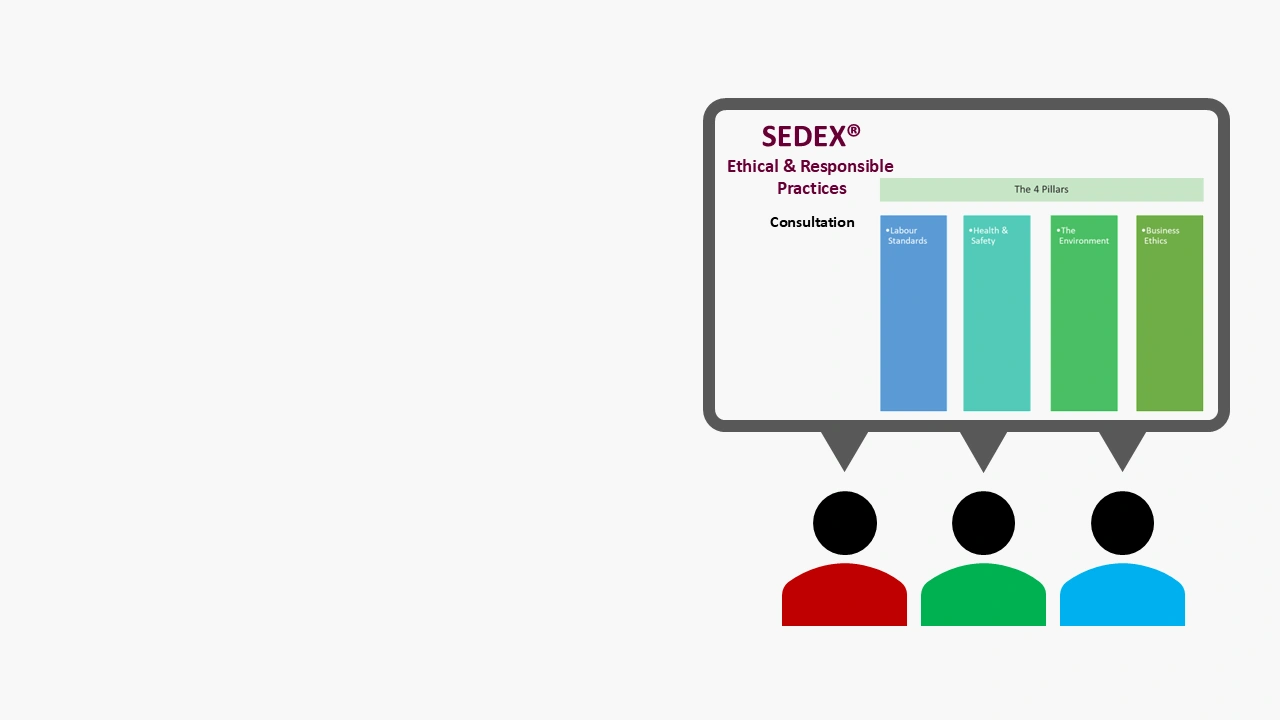
SEDEX®
Consultation
Achieve Sedex & SMETA Compliance with Confidence
From gap analysis to audit readiness, our Sedex® consultation services help you build transparent, responsible, and compliant operations.
SEDEX®
Sedex (Supplier Ethical Data Exchange) is a globally recognized platform that helps organizations manage, assess, and improve ethical and responsible business practices across their supply chains. It enables companies to share data on labor standards, health & safety, environmental practices, and business ethics in a secure and standardized way. Sedex is widely used by manufacturers, suppliers, and global buyers to demonstrate transparency, compliance, and social responsibility.
Sedex supports organizations in meeting international compliance requirements through tools such as SMETA (Sedex Members Ethical Trade Audit). This audit assess key areas including working conditions, employee rights, health and safety, environmental performance, and ethical business practices. By using Sedex, companies can reduce audit duplication, improve supplier visibility, and align their operations with global ethical trade standards.
Implementing Sedex helps organizations strengthen their risk management, regulatory compliance, and corporate responsibility efforts. It improves communication between buyers and suppliers, enhances brand reputation, and supports sustainable supply chain development. Sedex is especially valuable for companies involved in global sourcing, manufacturing, retail, and export operations, as it ensures ethical practices are consistently monitored and improved.
SMETA
SMETA (Sedex Members Ethical Trade Audit) is one of the world’s most widely used ethical audit methodologies, developed by Sedex to assess responsible business practices within supply chains. It helps organizations evaluate compliance with international standards related to labor rights, health & safety, environmental responsibility, and business ethics. SMETA audits are commonly required by global buyers, retailers, and brands to ensure their suppliers operate ethically and responsibly.
The SMETA audit framework is based on internationally recognized standards such as the ETI Base Code, ILO conventions, local labor laws, and best practice guidelines. Audits typically cover areas like working hours, wages, child labor, forced labor, discrimination, freedom of association, workplace safety, and ethical business conduct. Buyers determine the scope of SMETA audits, and they choose either a 2-Pillar assessment covering Labor and Health & Safety or a 4-Pillar assessment covering Labor, Health & Safety,
SMETA audits help organizations identify risks, improve workplace conditions, and demonstrate transparency to customers and stakeholders. The audit results are uploaded to the Sedex platform, allowing buyers to review compliance status and monitor improvement actions. By implementing corrective actions and continuous improvement plans, companies can strengthen ethical performance, reduce compliance risks, and build trust in global supply chains.
Top Benefits
- Improved Supply Chain Transparency – Enables clear visibility into labor, health & safety, environmental, and ethical practices.
- Reduced Audit Duplication – Share audit data with multiple buyers, minimizing repeated audits and saving time and cost.
- Stronger Ethical Compliance – Supports adherence to international labor standards and local regulations.
- Enhanced Risk Management – Helps identify and manage social, ethical, and operational risks in the supply chain.
- Buyer & Customer Confidence – Demonstrates commitment to responsible sourcing and ethical business practices.
- Better Supplier Relationships – Improves communication and collaboration between buyers and suppliers.
- Improved Workplace Standards – Supports better labor conditions, safety, and worker welfare.
- Global Market Access – Helps meet compliance requirements of international brands and retailers.
- Reputation & Brand Protection – Strengthens corporate image and reduces reputational risks.
- Support for Continuous Improvement – Encourages corrective actions and long-term ethical performance.
The Pillars
SMETA audits are conducted based on 2-Pillar or 4-Pillar assessment models, depending on buyer and compliance requirements.
- Labour Standards – Evaluates fair and ethical treatment of workers, including:
- Child labor
- Forced or bonded labor
- Working hours
- Wages and benefits
- Freedom of association
- Discrimination
- Disciplinary practices
- 2. Health & Safety – Assesses workplace safety and employee well-being, including:
- Safe working conditions
- Fire safety and emergency preparedness
- Machine safety
- Use of PPE
- First aid and medical support
- Workplace hygiene
- 3. Environment (4-Pillar only) – Reviews environmental responsibility, such as:
- Waste management
- Pollution control
- Energy and water usage
- Chemical handling
- Environmental compliance
- 4. Business Ethics (4-Pillar only) – Evaluates ethical business practices, including:
- Anti-bribery and corruption
- Fair business conduct
- Transparency
- Whistleblowing mechanisms
- Data protection
Audit Types
There are two types of SMETA audit. Depending on requirement, an organization may request for a 2-pillar or a 4-pillar audit.
- 2-Pillar SMETA: Labour Standards + Health & Safety
- 4-Pillar SMETA: Labour Standards + Health & Safety + Environment + Business Ethics
SMETA Consulting – Our Approach
Our SMETA Consulting services are designed to help organizations meet ethical, social, and compliance requirements under the SMETA (Sedex Members Ethical Trade Audit) framework. We provide structured, practical guidance to ensure your organization is fully prepared for SMETA audits and aligned with global buyer expectations. This structured approach ensures your organization meets SMETA requirements, improves ethical performance, and strengthens supply chain credibility. Our approach includes:
- Initial Gap Analysis – We assess your current practices against SMETA 2-Pillar or 4-Pillar requirements to identify compliance gaps and risk areas.
- Policy & Documentation Support – We help develop and refine policies, procedures, and records related to labor standards, health & safety, environment, and business ethics.
- Workplace Compliance Implementation – We support the implementation of SMETA requirements across operations, including worker welfare, safety systems, and ethical practices.
- Employee Awareness & Training – We conduct training programs for management and workers to build awareness of SMETA standards and compliance responsibilities.
- Internal Audits & Monitoring – We help establish internal audit systems and monitoring processes to track compliance and continuous improvement.
- Corrective Action Guidance – We support root cause analysis and corrective action planning for non-compliances identified during audits.
- Audit Readiness & Support – We prepare your organization for successful SMETA audits and help manage buyer expectations.ost-audit