
SA8000
Consultation
Expert SA8000 Consultation for Social Accountability
Ensure fair labor practices, workplace safety, and legal compliance through our structured implementation and certification support.
SA8000
SA8000 is an internationally recognized social accountability standard developed by Social Accountability International (SAI) to promote ethical, safe, and fair working conditions across global supply chains. It is based on key principles from the International Labour Organization (ILO) conventions, the UN Universal Declaration of Human Rights, and national labor laws. It applies to organizations of all sizes and industries, particularly those involved in manufacturing, sourcing, and supply chain operations, helping them demonstrate their commitment to human rights, worker welfare, and responsible business practices.
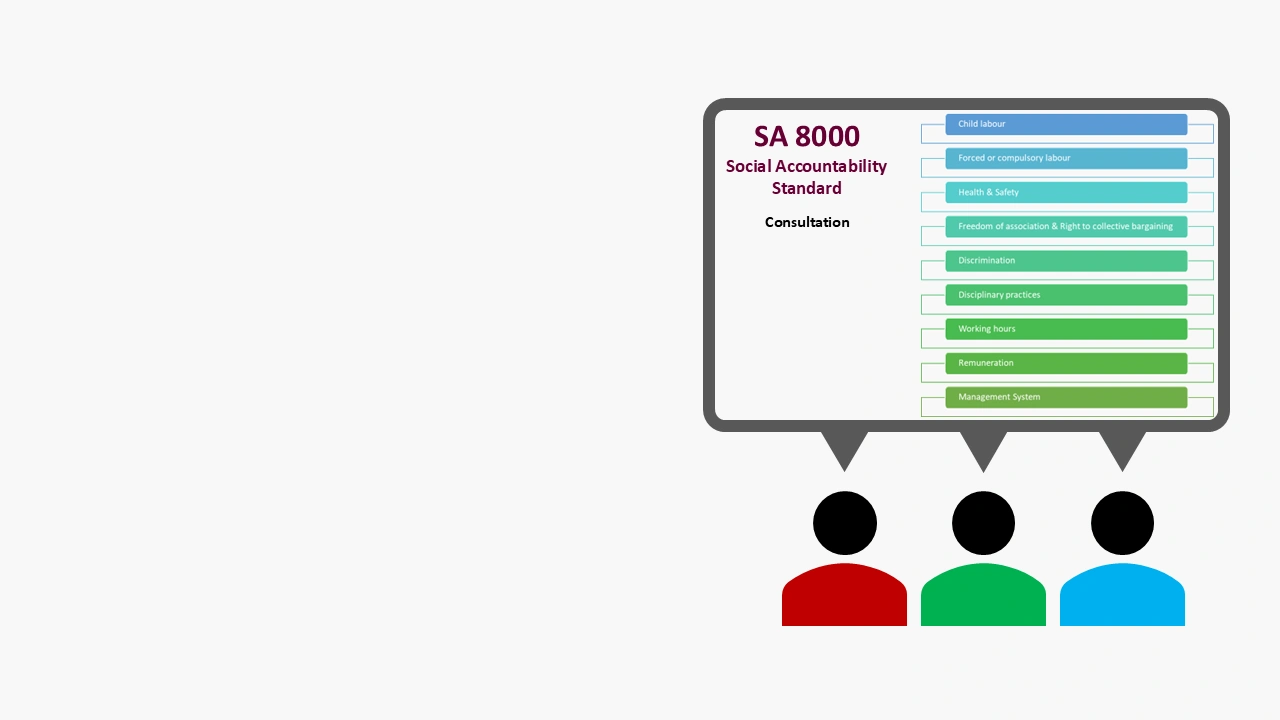
The standard addresses critical workplace issues such as child labor, forced labor, health and safety, freedom of association, discrimination, working hours, wages, and disciplinary practices. In addition to these labor requirements, it emphasizes the importance of a strong management system that includes policies, procedures, worker participation, grievance mechanisms, and continuous improvement processes. This structured approach ensures that social accountability is not just a policy statement but a fully implemented and monitored system within the organization.
Implementing SA8000 brings significant value to organizations by improving workplace conditions, enhancing employee morale, reducing compliance risks, and strengthening brand reputation. It also helps companies meet the expectations of global buyers, regulators, and socially conscious consumers who demand ethical sourcing and responsible supply chain practices. By achieving SA8000 certification, organizations demonstrate their commitment to ethical operations, transparency, and sustainable business growth.
Top Benefits
- Improved Worker Welfare – Ensures fair treatment, safe working conditions, and respect for employee rights.
- Legal & Regulatory Compliance – Helps organizations comply with labor laws and international standards.
- Enhanced Workplace Safety – Promotes strong health and safety practices to reduce accidents and risks.
- Stronger Brand Reputation – Demonstrates commitment to ethical and responsible business practices.
- Increased Employee Morale – Builds trust, engagement, and job satisfaction among workers.
- Better Risk Management – Reduces labor-related, legal, and reputational risks.
- Customer & Buyer Confidence – Meets expectations of global buyers and socially responsible customers.
- Ethical Supply Chain Management – Supports responsible sourcing and supplier compliance.
- Transparency & Accountability – Establishes clear policies, grievance mechanisms, and worker participation.
- Sustainable Business Growth – Aligns social responsibility with long-term business success.
Focus Area
- Child Labor – Prohibits child labor and requires remediation if found.
- Forced or Compulsory Labor – Ensures no forced labor or human trafficking.
- Health and Safety – Promotes a safe and healthy working environment.
- Freedom of Association and Right to Collective Bargaining – Supports workers’ rights to form unions.
- Discrimination – Prohibits discrimination based on race, gender, religion, etc.
- Disciplinary Practices – Prohibits abuse and inhumane treatment.
- Working Hours – Limits working hours in line with legal standards.
- Remuneration – Requires fair wages, at least meeting legal or industry standards.
- Management Systems – Ensures policies, training, and continuous improvement are in place.
Key Aspects
- Voluntary Certification – This is a voluntary standard, meaning organizations can choose to implement it and seek third-party certification to demonstrate their commitment to social responsibility.
- Third-party Audits – Certification is achieved through independent audits conducted by accredited certification bodies.
- Continuous Improvement – The standard encourages a culture of continuous improvement in social performance through regular monitoring, review, and corrective actions.
SA8000 Consultation – Our Approach
Our SA8000 Consultation services are designed to help organizations build ethical, safe, and compliant workplaces in line with international social accountability standards. We provide structured guidance to ensure your organization meets SA8000 requirements while strengthening worker welfare and responsible business practices. This structured approach ensures your organization meets SA8000 requirements, protects worker rights, and demonstrates strong social accountability. Our approach includes:
- Gap Analysis & Risk Assessment – We assess your current labor practices, policies, and working conditions against SA8000 requirements to identify gaps, risks, and improvement areas.
- Policy & System Development – We help develop social accountability policies, procedures, and management systems aligned with SA8000 and local labor laws.
- Workplace Implementation – We support the practical implementation of SA8000 requirements, including health & safety, working hours, wages, and worker rights.
- Employee Awareness & Training – We conduct awareness sessions to educate management and workers on their rights, responsibilities, and SA8000 expectations.
- Monitoring & Internal Audits – We help establish monitoring systems, grievance mechanisms, and internal audits to ensure ongoing compliance.
- Corrective Action Support – We guide organizations in addressing nonconformities through root cause analysis and corrective actions.
- Certification Readiness – We prepare your organization for SA8000 certification audits with confidence.